
Trash Bag Market Set to Reach USD 20.60 Bn by 2036, India Records 7.2% CAGR, Germany at 5.1%
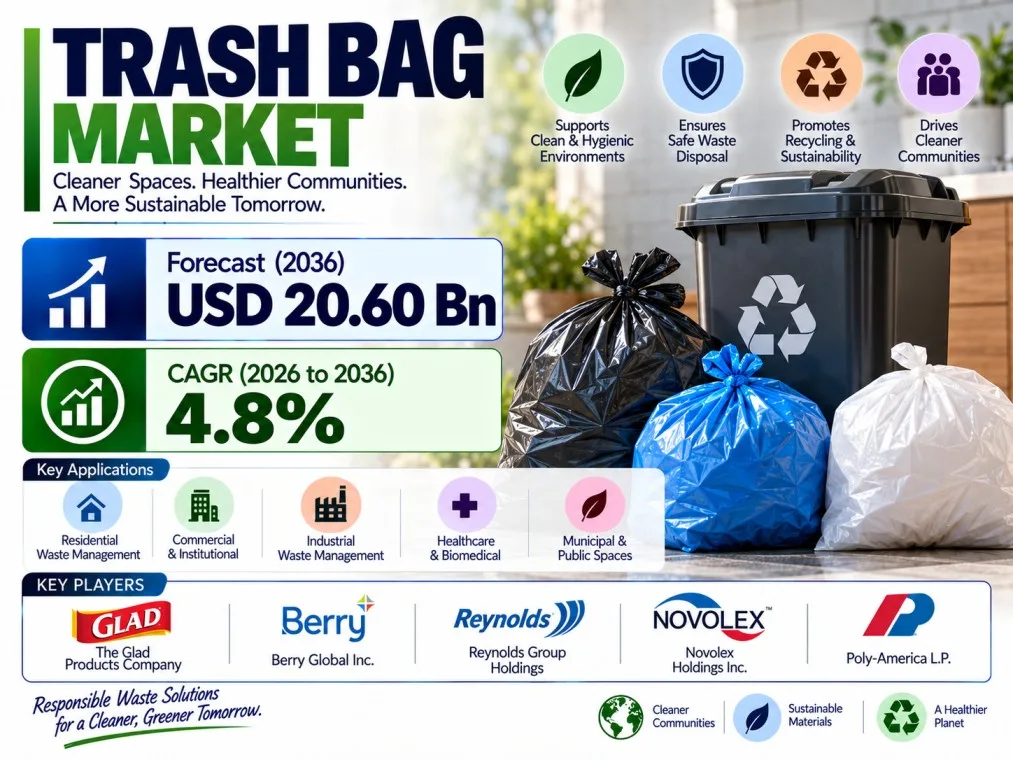
The global trash bag market is projected to reach USD 20.60 billion by 2036, up from USD 12.89 billion in 2026, registering a CAGR of 4.8% between 2026 and 2036, according to Future Market Insights (FMI).
The market was valued at USD 12.3 billion in 2025. Growth is being supported by urbanization, expanding waste management infrastructure, hygiene awareness, sustainability regulations, and increasing demand across residential, commercial, healthcare, and industrial applications.
Get Detailed Market Forecasts, Competitive Benchmarking, and Pricing Trends: https://www.futuremarketinsights.com/reports/sample/rep-g…
Urbanization Creates Consistent Demand for Waste Containment
Urban population growth is increasing the volume of household, commercial, and institutional waste requiring collection and containment. As cities expand, waste management infrastructure is also creating new demand for trash bags and liners.
The relationship between urbanization and waste generation is particularly relevant in developing markets, where investments in waste collection and segregation are expanding the addressable market.
India is projected to record the fastest growth among the countries covered, with a 7.2% CAGR through 2036. Brazil follows at 6.8%, while China is projected to grow at 6.7%.
Sustainability Requirements Reshape Material Selection
Environmental regulations targeting single-use plastics and landfill reduction are influencing the specifications of trash bags.
Manufacturers are increasingly developing products using HDPE, LDPE, and biodegradable polymers, while recycled-content and compostable alternatives are gaining attention in markets where regulations require changes in material composition.
The transition also creates cost pressures. Manufacturers investing in alternative materials need to manage higher compliance and production costs while maintaining the strength,

Sign in to join the conversation.